Farmers VS Big Oil How Ordinary People Are Winning Justice
A New Era of Accountability
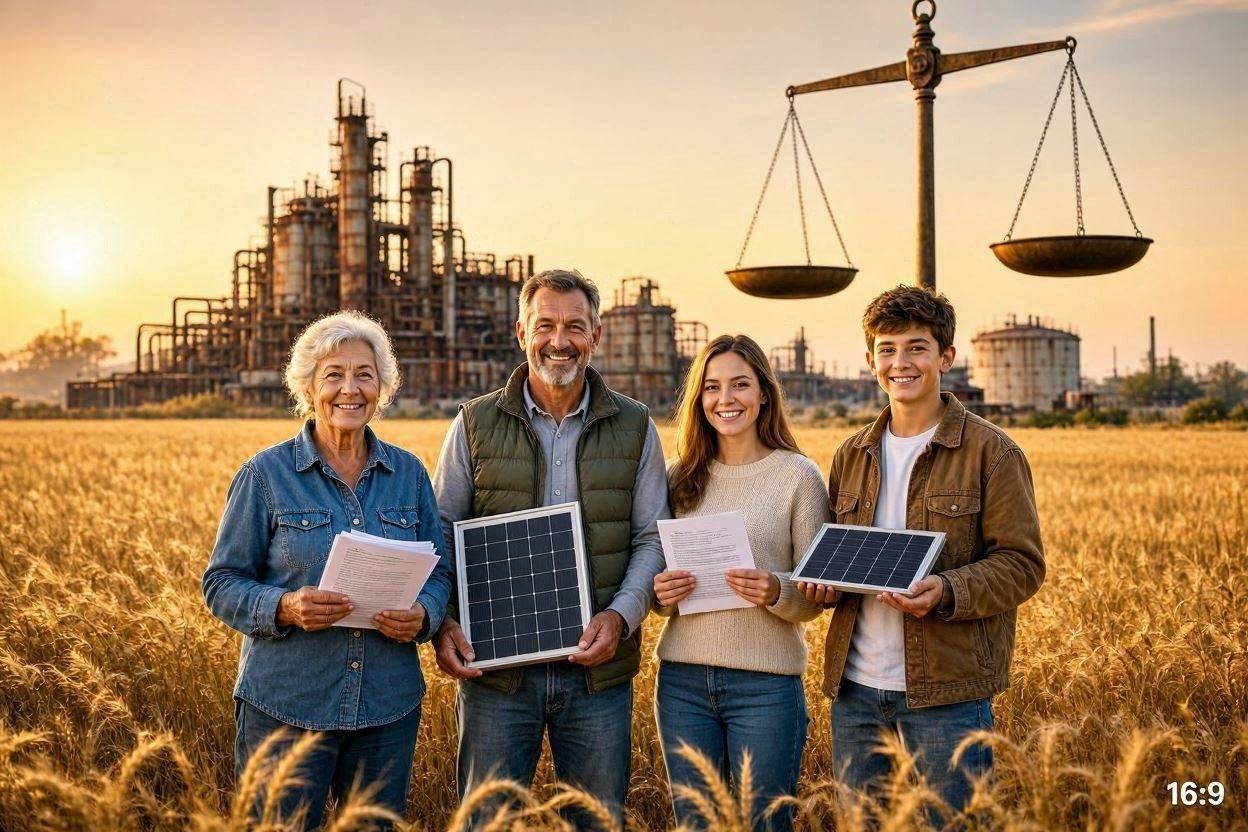
For decades, the global energy system has operated on an implicit bargain: fossil fuel companies extract and profit, while communities bear the costs. Pollution, displacement, and climate-induced disasters have been treated as unfortunate side effects rather than liabilities. But that bargain is being challenged. Around the world, farmers, Indigenous communities, and ordinary citizens are taking on Big Oil—and winning .
This is not activism in the traditional sense. It is a legal revolution. From the courts of London and Germany to the farmlands of Pakistan and Uganda, a new wave of climate litigation is forcing the fossil fuel industry to answer for its role in the climate crisis. The David-and-Goliath narrative is real, and the scales are beginning to tip.
The Legal Strategy That Changed Everything
The Peruvian Farmer Who Opened the Door
The modern era of corporate climate accountability began with a Peruvian farmer named Saúl Luciano Lliuya. Living in the shadow of the Andes, Lliuya watched as the Palcacocha Lake swelled dangerously due to accelerated glacial melt—a phenomenon directly linked to rising global temperatures . In 2015, he took the German energy giant RWE to court, arguing that the company’s historical emissions had contributed to the threat of a catastrophic glacial lake outburst flood that could devastate his hometown of Huaraz .
The case, Lliuya v. RWE, became a landmark. In 2017, a German court ruled that it could, in principle, hear the case. This established a precedent that a company could be held liable for its share of climate-related damages, even across borders . The principle of “transboundary harm,” first established in the 1938 Trail Smelter case, was being applied to the climate crisis .
From the Andes to the Indus Valley
Lliuya’s case opened a floodgate. In 2025, 43 farmers from Sindh, Pakistan—devastated by the catastrophic 2022 floods that submerged one-third of the country—announced they would follow his lead. They served legal notice to RWE and Heidelberg Materials, two of Germany’s largest carbon emitters, seeking compensation for their losses . Pakistan, which contributes less than one percent of global greenhouse gas emissions, had suffered disproportionate losses from climate-induced extreme weather .
This was a pivotal moment for South Asia. It marked the first cross-border climate lawsuit initiated by Pakistani citizens against Global North corporations, shifting the target from national governments to the corporate entities driving the crisis .
A Global Movement Takes Root
The Pakistani farmers are part of a broader, interconnected movement. The strategies are similar: communities that have suffered direct, quantifiable harm are using courts in the home countries of major polluters to seek redress.
Ugandan Farmers Take on a “Carbon Bomb”
In a striking parallel, four Ugandan farmers filed a lawsuit in the London High Court in July 2026 to stop the East African Crude Oil Pipeline (EACOP) . The 1,443-kilometer pipeline, led by French energy giant TotalEnergies, is described by critics as a “carbon bomb” that would lock in decades of fossil fuel extraction and threaten the livelihoods of millions who depend on Lake Victoria’s basin .
The case is novel. The farmers argue that EACOP’s British-registered operating company is violating Ugandan constitutional law, which guarantees a right to a clean and healthy environment . By suing in the UK, they are attempting to enforce stricter environmental standards and bypass concerns about the effectiveness of local courts .
The Niger Delta Precedent
This strategy builds on a major victory for Nigerian farmers against Royal Dutch Shell. In 2021, the UK Supreme Court allowed Nigerian farmers to sue Shell in English courts for oil spills in the Niger Delta, ruling that the parent company owed a “duty of care” to the affected communities . This decision confirmed that multinational corporations cannot evade responsibility for environmental damage caused by their subsidiaries simply by incorporating abroad .
Why This Matters Now
The Changing Legal Landscape
The recent advisory opinion from the International Court of Justice (ICJ) has reinforced the importance of scientific evidence, like that from the Intergovernmental Panel on Climate Change (IPCC), in establishing causation in climate cases . While the ICJ did not settle all attribution questions, it provided a powerful framework for judges to link corporate emissions to specific climate impacts .
The Moral and Economic Argument
These cases are grounded in a simple but powerful principle: the polluter pays. For decades, fossil fuel companies have externalized the costs of their business—placing them on farmers who lose their crops, communities that face flooding, and nations that bear the brunt of extreme weather . By seeking compensation, these ordinary people are not just fighting for money; they are fighting to establish a new economic reality where the costs of carbon are internalized .
What the Future Holds
This movement is likely to accelerate. The success of cases like Lliuya and the Shell Nigeria precedent has created a blueprint. Over 30 similar cases worldwide now seek monetary claims from fossil fuel companies . The “David vs. Goliath” dynamic is shifting. While corporate resources and legal delays remain formidable obstacles, the sheer volume of cases and the growing body of precedent suggest that Big Oil can no longer operate with impunity .
Conclusion
The fight against climate change is often framed as a conflict between environmentalists and industry. But the new reality is that farmers, fishermen, and Indigenous communities are at the front lines. They are not just victims; they are becoming architects of a new legal order. By using the tools of the courts, they are turning the tables and proving that when ordinary people demand justice, even the most powerful corporations can be held accountable.
Frequently Asked Questions (FAQs)
What is the “polluter pays” principle in climate litigation?
It is a legal principle that holds companies responsible for the cost of the environmental damage they cause. In climate cases, plaintiffs argue that major carbon emitters should contribute to the costs of climate adaptation and recovery from extreme weather events linked to their historical emissions .
How can a farmer in Pakistan sue a German company?
This is possible through “transnational climate litigation.” The Pakistani farmers are following the precedent set by Peruvian farmer Saúl Lliuya, who sued the German company RWE. These cases argue that companies based in one country can be held liable for harm caused by their emissions in another country (transboundary harm) .
What was the significance of the Saúl Lliuya case against RWE?
It was the first case to establish that a major fossil fuel company could, in principle, be held liable in court for a share of climate change damages. A German court ruled the case could proceed, setting a global legal precedent for corporate accountability on climate change .
Why are so many cases against oil companies being filed in the UK?
The UK has become a major hub because its courts have ruled that a parent company can owe a “duty of care” to communities affected by the operations of its foreign subsidiaries. The Shell Nigeria case was a landmark ruling that opened the door for these claims .
What is the aim of the Ugandan farmers’ lawsuit against EACOP?
The four Ugandan farmers are seeking to stop the East African Crude Oil Pipeline from operating. They argue the project violates their constitutional right to a clean environment and will worsen the climate crisis, threatening their livelihoods and communities .
Is this wave of litigation actually effective?
Even when cases take years or are ultimately unsuccessful, they have a significant impact. They create legal precedents, force companies to spend resources on defense, increase public scrutiny of corporate behavior, and put political pressure on governments and industry .