
Can You Sue a Polluter The Rise of Climate Justice Lawsuits
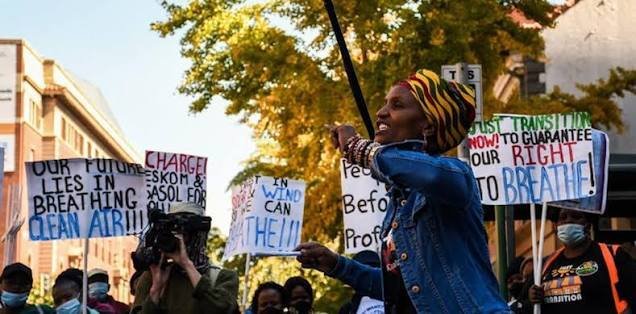
For decades, the question of whether you could hold a major polluter legally responsible for climate change seemed purely theoretical. Fossil fuel companies operated with a sense of impunity, shielded by the sheer complexity of proving that their specific emissions caused a specific harm. However, the global landscape is shifting. A new wave of climate justice lawsuits is emerging, challenging the notion that polluters can contribute to a global crisis without facing legal consequences .
The Legal Theory Behind Suing Polluters
The ability to sue a polluter for climate damage has been made possible by a convergence of legal doctrines, evolving scientific evidence, and a growing judicial recognition of the climate crisis. While suing a government for inadequate climate policy is common, taking on private corporations like Shell, RWE, or Chevron presents unique legal hurdles but also offers a direct path to accountability .
The “Atmospheric Trust” and Public Trust Doctrine
One of the foundational legal theories in these cases is the public trust doctrine. This ancient legal principle holds that certain natural resources—like navigable waters, shorelines, and, increasingly, the atmosphere—are owned by the public and held in trust by the government . Governments have a fiduciary duty to protect these resources for both current and future generations.
Plaintiffs argue that by allowing the atmosphere to be polluted and the climate to destabilize, governments have violated their duty as trustees. While U.S. courts have sometimes erected procedural barriers to these claims, courts in other jurisdictions, including India and Pakistan, have shown a greater willingness to apply the doctrine to the atmosphere, recognizing that the government’s obligation to protect essential resources cannot be legislated away . As one analysis notes, a defining feature of this obligation is that it “cannot be legislated away” .
The “Polluter Pays” Principle and Transboundary Harm
A key driver of corporate climate litigation is the “polluter pays” principle, which states that the party responsible for pollution should bear the cost of managing it to prevent damage to human health or the environment. This concept is closely linked to the legal principle of transboundary harm, which holds that a state or entity cannot be allowed to cause damage to the environment or people in another country .
This principle was famously established in the 1938 Trail Smelter case, where a Canadian smelter was held liable for damages caused by its fumes crossing into the United States. The case of Peruvian farmer Saúl Luciano Lliuya against the German energy giant RWE has applied this logic to climate change . Lliuya argues that RWE’s historical emissions have contributed to the melting of Andean glaciers, threatening his hometown of Huaraz with a catastrophic glacial lake outburst flood. He is seeking a proportional share of the costs for protective measures, based on RWE’s contribution to global emissions . While the German court ultimately found the risk of harm too remote to award damages, the judge acknowledged the case’s importance, describing it as a “microcosm of the world’s problems between north and south, rich and poor” and confirmed that the legal arguments were coherent .
Key Cases Shaping the Landscape
Several landmark cases are paving the way for climate justice, demonstrating different strategies and achieving varying degrees of success.
Against Governments
Strategic litigation has been highly effective in forcing governments to take more ambitious climate action. The 2019 Urgenda case in the Netherlands was a watershed moment, where the Dutch Supreme Court ordered the government to cut its greenhouse gas emissions by at least 25% by the end of 2020 . This case established that governments have a legal duty of care to protect their citizens from the dangers of climate change, using human rights law as a foundation. In a similar vein, the Supreme Court of Nepal has expanded the right to life to include the right to a healthy environment, and its rulings have pushed the government to enact climate policies .
Against Fossil Fuel Companies
The most high-profile corporate case is Milieudefensie v. Royal Dutch Shell. In 2021, a Dutch court ruled that Shell must reduce its global carbon emissions by 45% by 2030 compared to 2019 levels . This was the first time a court had ordered a private company to align its policies with the Paris Agreement. The ruling was based on Shell’s “significant contribution” to climate change and its duty of care under Dutch law . The decision sent shockwaves through the corporate world, establishing that businesses can be legally required to accelerate their energy transition.
In the Philippines, another case reflects the global nature of these lawsuits. In 2025, more than 100 typhoon survivors filed a lawsuit against Shell in a UK court, claiming that the company’s fossil fuel investments worsened the destructive power of Super Typhoon Rai, which killed hundreds of people . While Shell dismissed the case as “unfounded,” it highlights how communities are using the court system to seek compensation for climate-related damages, often choosing jurisdictions where the company is headquartered .
The Challenge of Proving Cause and Effect
Despite these advances, significant hurdles remain. The central challenge for plaintiffs is proving causation. How can you prove that a single company’s emissions were the cause of a specific extreme weather event that damaged your property?
Corporate Defenses and Scientific Disputes
Fossil fuel companies no longer deny climate change, but they have become sophisticated in challenging the legal relevance of climate science. They argue that climate change is a global, multi-causal issue involving countless actors, making it impossible to establish a direct causal link between their actions and a specific harm . They contest the sufficiency of plaintiffs’ evidence, arguing that climate science is not rigorous enough to meet the legal standards of proof. They may also question the scientific integrity of the evidence or the bias of the researchers, effectively “reframing, undermining, and discrediting” the science that points to their liability .
The Role of Attribution Science
The tide is turning with the advancement of attribution science. This field of climate research allows scientists to quantify the extent to which human-caused climate change has increased the likelihood or severity of a specific weather event, such as a flood, heatwave, or storm . The Intergovernmental Panel on Climate Change (IPCC) has stated that advances in attribution science “provide the basis for climate litigation” . This new science is making it easier for plaintiffs to argue that a company’s emissions were a substantial contributing factor to their damages, making the legal link more tangible and credible.
A Growing Trend
Climate litigation is surging worldwide. From South Asia to Europe and the Americas, domestic courts are increasingly becoming forums for climate action . The rise of these lawsuits represents more than just a legal trend; it is a fundamental shift in the accountability paradigm. It signals that the era of impunity for major polluters is ending and that they can and will be forced to answer for their contribution to the climate crisis in a court of law.
Frequently Asked Questions
Can an individual sue a company for climate change?
Yes. Individuals whose property or health is directly threatened by the effects of climate change, such as flooding, sea-level rise, or extreme weather, are increasingly filing lawsuits against major fossil fuel companies. The most famous example is the case of Peruvian farmer Saúl Luciano Lliuya against the German energy company RWE . These individuals typically seek compensation for damages or funding for protective measures.
What is the “public trust doctrine” in climate lawsuits?
The public trust doctrine is an ancient legal principle that certain common resources, like the air, sea, and navigable waters, are owned by the public and held in trust by the government . In climate lawsuits, plaintiffs argue that the atmosphere is part of this “public trust” and that by failing to protect it from greenhouse gas pollution, the government has violated its fiduciary duty to safeguard these resources for current and future generations.
What is the “polluter pays” principle?
The “polluter pays” principle is a foundational concept in environmental law that states the party responsible for producing pollution should bear the cost of managing it to prevent damage to the environment or human health . In climate litigation, this principle is used to argue that fossil fuel companies, which have historically generated the bulk of greenhouse gas emissions, should be financially responsible for the costs associated with climate change adaptation and damages.
What are the biggest hurdles in suing a polluter?
The primary hurdle is proving causation. It is notoriously difficult to prove a direct and specific link between a single company’s emissions and a particular climate impact, such as a hurricane or a flood. However, advances in attribution science, which allows scientists to calculate the influence of climate change on extreme weather events, is helping to overcome this challenge . Other hurdles include jurisdictional issues and the immense legal resources wielded by large corporations to delay and dispute cases.
How are courts in different countries responding to climate lawsuits?
Judicial responses vary widely. Courts in the Netherlands have issued historic, binding rulings against both the government (Urgenda) and a private corporation (Shell) . Meanwhile, U.S. courts have historically been less receptive, often erecting procedural barriers that prevent cases from being heard on their merits . In the Global South, courts in countries like India, Pakistan, and Nepal are increasingly using their authority to enforce environmental principles and require governments to act on climate change .